
Sustainable Packaging Under PPWR
PPWR requires all packaging to be 80% recyclable by 2038 and include 10 to 35% PCR content. Businesses are tasked with developing packaging that is easily recyclable to promote resource efficiency and reduce landfill waste. Its implementation comes with many technical challenges for the packaging industry, also in slitting processes. Innovations in blade technology are critical to overcoming issues like blade wear, dust formation and corrugated edges.
The first measures of the PPWR are already in place and businesses must comply with them by August 2026.
Mono-material Packaging
The regulation encourages the adoption of mono-material packaging, such as all-polyethylene (PE) or all-polypropylene (PP) laminates, because their homogeneous structure simplifies recycling processes compared to multi-layered or composite packaging materials.
PCR Content Inclusion
The move toward incorporating 35% PCR content in plastic packaging supports the responsible use of post-consumer waste for re-manufacturing, helping to close the loop on plastic waste.
Mono-Material Laminates: Easier to Recycle, Yet Challenging to Slit
Mono-materials such as all-PE and all-PP laminates are valued for their ease of recyclability. However, these materials complicate slitting operations due to their unique mechanical and structural characteristics. Slitting challenges associated with mono-materials include:

Blade Wear
Due to their unique characteristics, mono-materials can degrade slitting blades more quickly, leading to increased maintenance costs.
Corrugated Edges
Achieving clean cuts can be difficult, leading to uneven or corrugated edges that may impact downstream operations.
Reel Edge Quality
High reel edges during slitting can create issues in winding, storage, and use of the rolls down the line.
Best Practices in Slitting Plastic Mono-Materials
Mono-material slitting issues like adhesive wear and blade degradation can be resolved by implementing advanced blade technologies such as our Fortis and Fortis+ range. These blades are engineered for durability and optimized to minimize wear, ensuring consistent cut quality while reducing maintenance intervals and associated downtime.
Slitting Challenges with Post Consumer Recycled Film
The move toward integrating PCR content in plastic packaging introduces significant slitting challenges. PCR film slitting challenges include:
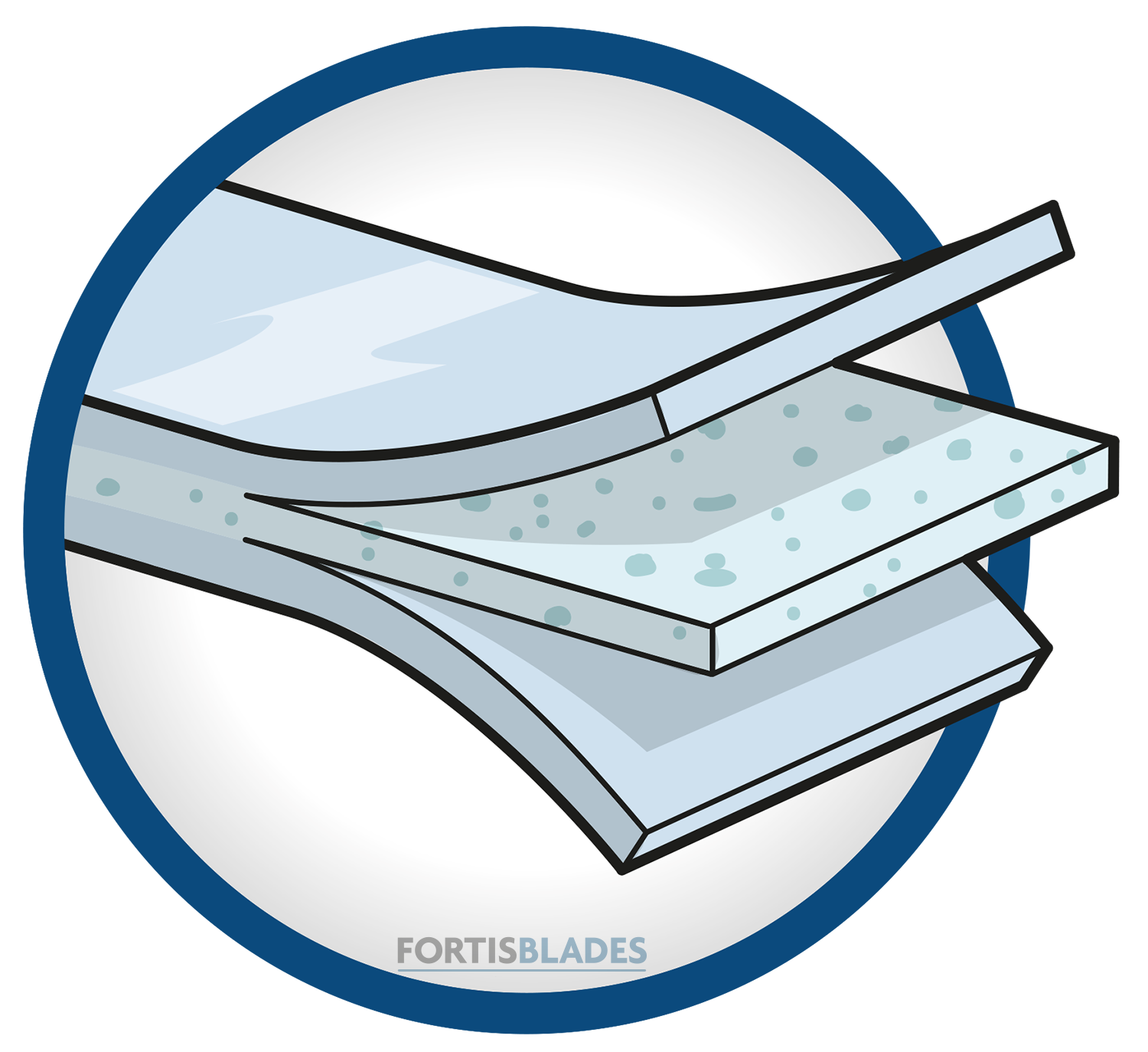
Abrasive Wear due to Impurities and Gel Clusters
The mechanical recycling process can introduce contaminants into PCR films, causing gel clusters to form. These clusters lead to abrasive wear on blades, shortening their lifespan.
Slitting Resilient Outer Layers
To maintain film integrity, PCR films often use coextruded outer layers made of booster resins. These layers add adhesive wear during slitting, further challenging blade longevity and cut consistency.
Slitting Thinner Film Gauges
PCR films can be thinner (e.g., 25 µm compared to traditional 40–60 µm), which improves sustainability but reduces film strength. Slitting thinner films requires higher blade precision.
Best Practices in Slitting PCR Film
Both abrasive wear (resulting from gel clusters) and adhesive wear (from resilient outer layers) are significant issues, requiring durable slitting solutions like the Fortis+ razor blade series, which is specifically designed to handle the complexities of PCR film.

Turning PPWR Challenges into Opportunities
The PPWR framework is reshaping the packaging industry, demanding innovation in both materials and processes. While mono-material laminates and PCR films present unique slitting challenges, such as blade wear, dust formation, and edge quality. Advanced blade technologies like the Fortis and Fortis+ series provide the precision and durability needed to meet these demands. By investing in optimized slitting solutions, businesses can ensure compliance, improve efficiency, and stay ahead in the transition toward sustainable packaging.