
What is Agricultural White Film?
Agricultural film is thin plastic sheeting used across farming to protect crops and improve yields. Often laid over soil, silage wrap and stretch film used to store feed, or greenhouse film that shields crops from the weather.
If you process agricultural film, this might sound familiar: the material coming in is clean, your machines are well maintained, and the settings are dialled in correctly. Yet your blades still don't last as long as they should.
The culprit is two fine mineral powders mixed into the film itself: silicon dioxide (SiO₂) and titanium dioxide (TiO₂). Silicon dioxide is added as an anti-blocking agent, so the layers don't stick together while the film is being made, stored, and used. Titanium dioxide is added as a white pigment that blocks UV light, protecting crops and soil from sun damage, helping suppress weeds under mulch film, and giving the film its opaque white color. Together, these two additives are why the industry simply calls this kind of material "white film."
What's Really Causing Your Blade Wear Problem?
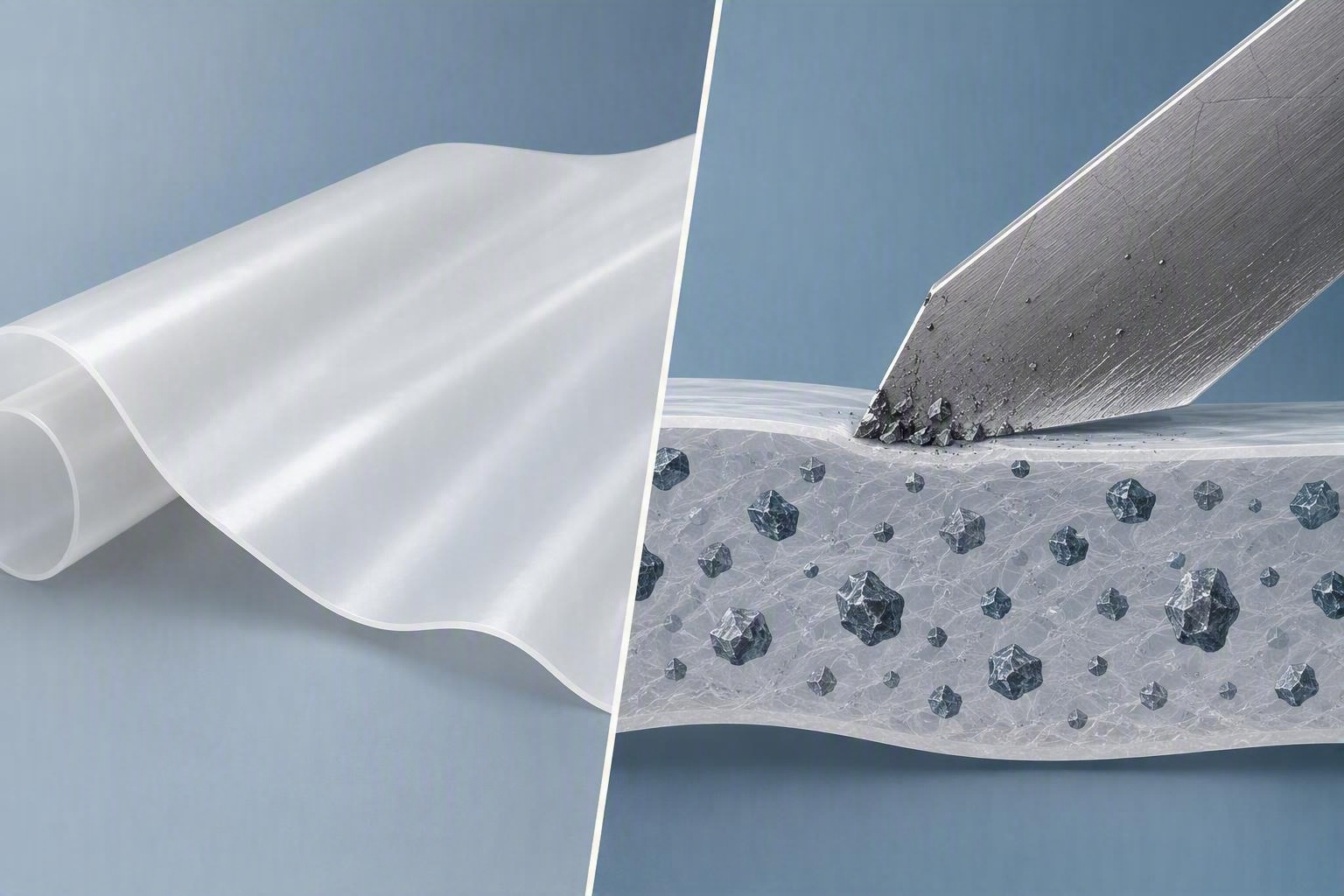
Agricultural film looks and feels soft and flexible. But that powder mixed into it is actually made of tiny, hard, abrasive grains. Every time a razor blade slits through the film, whether it's trimming edges on extrusion lines or slitting further down in converting, it's grinding against thousands of these tiny grains. Like cutting with sandpaper mixed in.
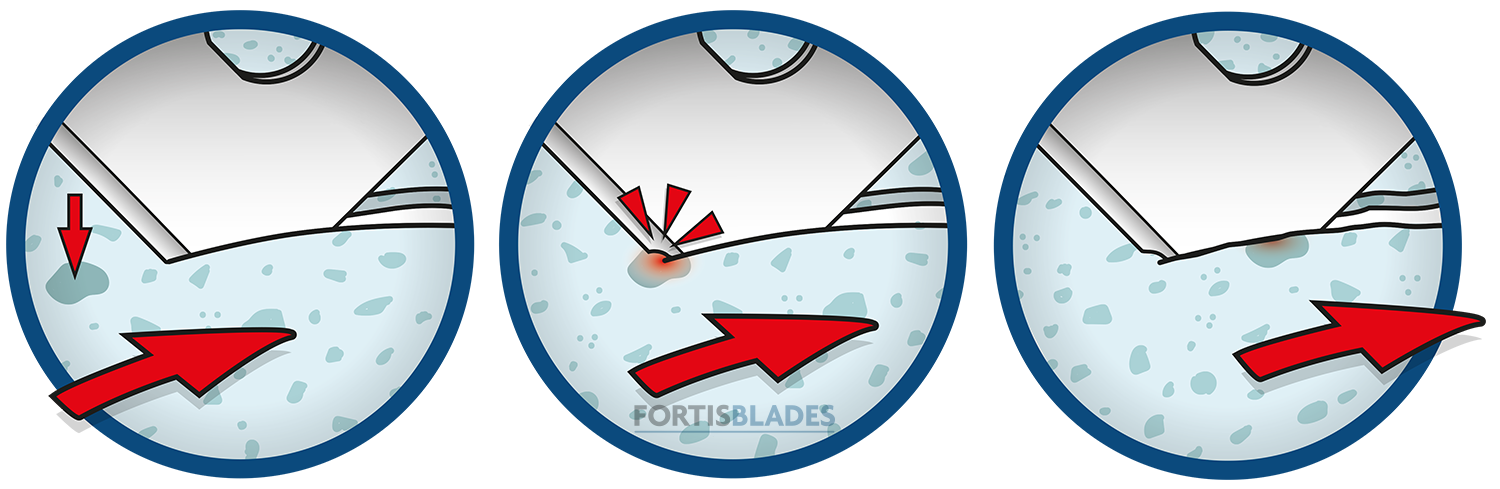
Signs Your Blades Are Fighting Abrasive Film
Over time, cutting abrasive white film leads to:
- Blades wearing out much faster than expected
- Having to change blades more often
- More downtime for changeovers
- Higher maintenance costs
- Cuts that get less clean and less consistent
Standard steel blades simply aren't built to handle this kind of abrasive wear-and-tear. Even when everything else in the process is working perfectly.
The Real Cost Isn't the Blade
When white film chews through blades faster than it should, the price tag isn't really about the blade.
Downtime, Maintenance, and Lost Output
When processing abrasive white film, the true cost often isn't the blade itself.
It's the production interruptions, maintenance time, and lost throughput caused by premature wear.
Choosing the right blade can make a measurable difference in overall plant efficiency.

Get a Blade Recommendation for Your Material
Reach out to FortisBlades to talk through what you're processing and get a blade solution built for your specific abrasive film challenge.